Thursday, 25 August 2016

No.90 - The Brilliant World of Tom Gates

So, I've reached number 90, meaning I have officially completed a 10th of my challenge!!! Huzzah!! 
I think my favourite book from the first 10 has got to be Inkheart by Cornelia Funke, and I urge everyone who hasn't read it to go out and find a copy ASAP! You'll enjoy it! I'd also like to say how much I loved Michael Foreman's beautifully illustrated memoir War Boy, and again I urge you all to have a look at it! 


This post's book is The Brilliant World of Tom Gates by Liz Pichon. Now, so far on this journey the books I've read haven't particularly felt like children's books. Thomas the Tank Engine has probably been the most childlike book so far, but even that felt quite grown up due to its old fashioned writing style. In a stark contrast to this Liz Pichon's book screams 'I AM FOR CHILDREN!!'. The cover itself exudes mischief, fun and childhood, to the point where it would seem that this book has actually been written and illustrated by the main protagonist Tom. And this is exactly Pichon's intention! The cover is as symbolic as the 'Keep Out' sign you might find on a teenagers door or diary, and as an adult reader I almost felt like I was prying! Tom, whom I would place at about 10 years old, is the heart and soul of this book and to all intents and purposes the book is written by him. When you open this book it's not your traditional print book, but instead it is more of a journal or notebook in which 'Tom' has doodled and recorded his life. Just take a look! 


Pichon absolutely succeeds in making you believe that this is the genuine article rather than a work of fiction, and I can imagine that this is very appealing for a pre-teen reader! I think some children, and in particular boys, as many studies have proven, struggle with a traditional print book. This is not to say that their reading skills are below average, but I just think that for some children the idea of a block of text can be quite daunting. What Pichon has achieved here, and in the rest of the Tom Gates series, is a book that is totally accessible. It's numerous amusing doodles, annecdotes and stream of conciousness style of writing keeps the readers attention in a way that a print book just can't. Children can't get bored of Tom Gates's world because the story changes and develops at such a fast pace! For an adult reader this was hard to keep up with and I struggled a little trying to put myself in the place of a 10 year old boy who liked nothing more than annoying his older sister and was obsessed with a rock band called Dude 3!! However, for many 10 year olds this will no doubt strike a chord, and I'll admit that some of Tom's world seemed familiar even to me! (In particular the trial of bumping into a teacher outside of school! Who doesn't remember how weird that was!? And Tom's teacher was wearing leather trousers!! Awkward!) 

I take my hat off to Liz Pichon for creating a book that so wonderfully (and amusingly, may I add) gets into the headspace and world of Tom. She makes it seems so effortless, and this is the beauty of this book. I would certainly recommend it to anyone who is struggling to get a child into reading, in particular boys. It's a quick read, full of wit, mischief and in some ways the reality of school life when you're 10! The embarrassment of parents, the importance of seeing your favourite band, and the horror of school photos and parents evening! The doodles make it endearingly fun and there is even an interactive element, with a lesson on how to draw Tom's older sister Delia at the back! 

Although I was extremely conscious that this book was aimed at a child audience and felt like I was in forbidden territory, for the intended readership I think The Brilliant World of Tom Gates is a very original, enjoyable book that shouldn't be missed! 

Thanks for reading! L X

In other news I'm going to be taking a little break from the blog in September while I make preparations and get started on my MA in Children's Literature! It's all very exciting, but there is so much reading to do that I am going to have to focus on that for a bit. I'm hoping though that what I learn will inform my reading of the books on this list, and in turn produce more interesting posts for you to read, so it's a win win situation! Don't worry though, it won't be long before I'm back here telling you all about the course and the next book on the list, Mary Poppins by P.L. Travers! L x

Monday, 15 August 2016

No. 91 - Saffy's Angel


In the last week or so i've had so many ideas for this blog that I think my head might explode!! I've made lists of things that i'd like to try out, so hopefully there'll be a lot more than just book reviews happening in this space soon! If you read my last post about books vs films then you'll have got a little flavour of things to come, including more engagement with children, and topics other than the books that i'm reading. I'm really hoping to expand what Little Bookworm is about! 

Anyway, today is another review. This time its number 92 on my list, Saffy's Angel by Hilary McKay.


The title seemed familiar and when I read the synopsis I realised that i'd read this book when I was younger, so I was quite interested to see how I would feel coming back to it as an adult. The story is about Saffy, a 13 year old girl who goes to Italy in search of a stone angel left to her in her Grandfather's will. I can't remember my exact opinion of this book from when I was small, but i'm afraid to say that as an adult reader I found the story a little thin, which is a shame. However, what I absolutely love about this story is Hilary McKay's characterisation!

The story centres around the Casson family, a loveable, but truly chaotic family of six. Bill and Eve Casson are artists, and their three children, Cadmium (Caddy), Indigo and Rose are all named after paint colours, which is a really lovely touch. Saffron (Saffy) is adopted, she is the daughter of Eve's sister, who died in a car accident whilst living in Italy. Her name does not appear on the paint chart in their kitchen, and this was how she discovered that Bill and Eve were not really her parents. McKay deals with the concept of adoption in a gentle and sensitive way by placing great emphasis on the closeness of the Casson family children, including Saffy. She refers them as a pack. They all stick up for each other, each offering their own individual strength to family life, and this is how they muddle along together.

Each character has their own individual quirky nature, making them wonderfully endearing, and this is what I love about this book! Caddy, the eldest, is scatty, away with the fairies a lot of time, and breeds Guinea Pigs in the front garden! She dreams of studying Zoology at university and going to work in Africa, just as soon as she manages to pass her A Levels. Then there is Indigo, the only boy of the pack, he has dreams of becoming an Arctic explorer once he's faced his fears and feels brave enough to leave his sisters. He spends a lot of time sitting on the outside edge of his window sill confronting his fear of heights! The smallest Casson child is Rose, known to her siblings as Permanent Rose, because she was very poorly as a baby but now she's not going anywhere (coincidently, it's also a paint colour). She loves art, and is always painting something, somewhere in the house; she also eats paint which her mum believes made her a stronger baby! Mum Eve, spends all her time painting in her shed and unfortunately sometimes forgets she has children to look after, hence the need for the Casson kids to stick together. Their long-suffering dad Bill spends most his time in his London studio, escaping the chaos that is his family! And finally there is Saffy, not a true Casson, but loved by them all the same. She is much calmer than the others and has a bit more of a grasp on reality. As you can see McKay has excelled in creating characters that really grasp the readers attention. By giving so much background and character information within the story readers can identify with the characters in the best way possible; as if they were their family or friends, or even themselves. Even I found myself wishing that I had a sister like Caddy, and thinking wouldn't it be nice to live in a house like theirs. However, realistically I don't think my nerves could take it!! I'm more like Bill Casson than i'd care to admit!

Despite being a fairly ordinary story of a teenager on a journey of personal discovery, McKay manages to create a whole extraordinary domestic world in which it can happen. From the house itself, to what's for dinner, the Casson's slightly dysfunctional home life is a joy! I am pleased to say that there are three more books in the Casson family series, and despite not loving this story, I feel compelled to read the next books to find out what happens to these wonderful characters as they grow up! The Casson family is not a family you can forget about quickly!

Thanks for reading! L x

Next up is The Brilliant World of Tom Gates by Liz Pichon.


Thursday, 4 August 2016

Books vs Films

Is it better to read the book or see the film? Or is there merit in both? For years now I've always slightly considered film adaptations of books inferior to the books themselves, in particular films of children's books! It upsets me greatly that a child might only know who The Cat in the Hat or The Grinch is because they've seen the films! I can't bear the thought of children not exploring the books I loved when I was little, or worst still, not even knowing they exist! Children these days seem to watch a lot more films, and they seem even more readily available with on demand viewing and digital downloads common in most houses (don't even get me started!). I suppose i'm just really scared that the book will go extinct and the children of today will grew up not knowing the pleasure of getting lost in a book, instead of screen.

The only film adaptation of children's stories that I can remember when I was a child were the Disney films, and as I now know, these were grossly different to the texts from which they took their names! You only have to watch the film Saving Mr Banks to see what liberties Walt Disney took with author's original works! If you haven't seen this film, its about P.L Travers, creator of the wonderful Mary Poppins, and the struggle she went through when Walt Disney 'Disney-fied' her beloved books. Its well worth a watch! Anyway, if adaptations were around they were more than likely to be on the tele, but I don't seem to remember there being that many, which I suppose is why I'm biased towards the book! I read, A LOT, and so books were a huge part of my childhood. 

Anyway, recently i've come to realise that the adaptation may not be so bad after all, and frankly I shouldn't be such a book snob! The more I thought about the film/TV adaptation vs the book I realised that I too was guilty of enjoying film or TV before book. I actually don't think I would have read a lot of the novels i've read if it wasn't for the BBC! I read Tess of the D'Urbevilles after watching the tele adaptation, and the same can be said for Pride and Prejudice (Jane Austen), The Ladies Paradise (Emile Zola), and Cider with Rosie (Laurie Lee). And of course i'd be lying if I said i'd read all the Harry Potter books before i'd seen the films! The films actually inspired me to read the books! Often i've enjoyed an adaptation on the tele or seen a really good film version of a book, my first thought is 'I need to read this!', so this left me wondering whether seeing a film could also inspire a child to read a book? I could deal with that! Maybe film adaptations might not be the route of all evil after all.....

If you know me you'll know I have a Lilia (7) and an Archie (4), my little second cousins. When I went to see them the other day they were buzzing about having just seen the brand new film adaptation of The BFG. It is the must-see film of the summer holidays and they told me it was great! I was very pleased to hear that having seen the film Lilia was now keen to read the story, so we grabbed the book and started reading, taking it in turns. It was really lovely to see her engaging with the story and the characters. I think having seen the film, and therefore now knowing the story, she was able to enjoy the book more and have a greater understanding of Dahl's tale. Below is a drawing she did of the BFG himself, after we read his description in the book. I love it!


So could seeing the film of a book actually encourage children to read and enhance their understanding and enjoyment of a story? Absolutely! I've certainly got a more open mind on this subject now. I think children will always eventually find these books, even if they've seen a film adaptation. In fact seeing the film may even make them seek out the book! As much as on demand tele allows for films to become a regular event, I think reading will still play a huge role in the lives of children. So, to answer my original question, there's certainly merit in both film and book and whatever sparks a child's imagination and gets them reading, i'm for it!! 

Thanks for reading, L x

Thursday, 28 July 2016

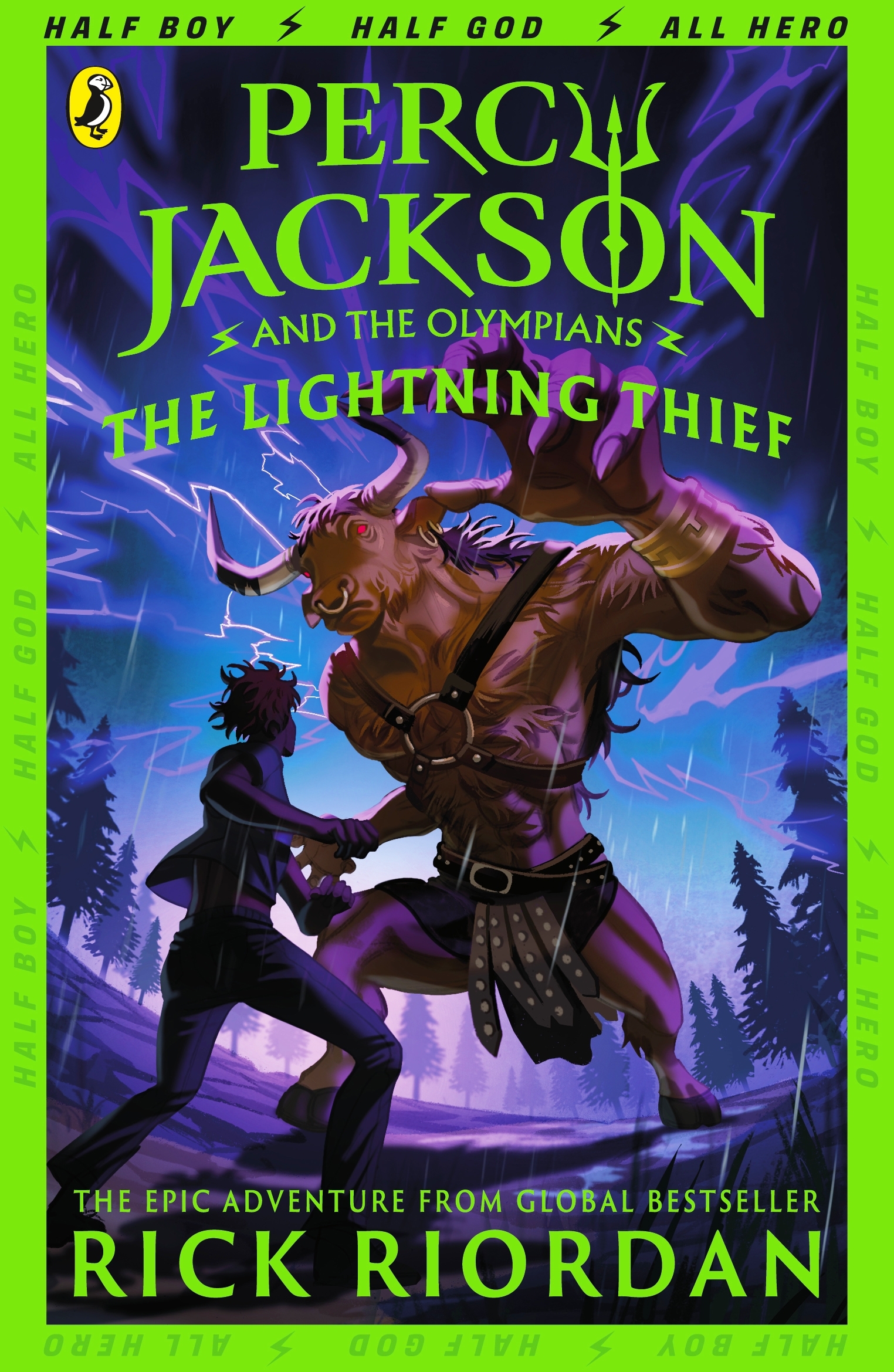
No.92 Percy Jackson and the Lightning Thief


I was totally prepared to hate this book. I'd convinced myself that I didn't like American children's fiction, let alone American teen fiction! And did you really expect me to enjoy a book that seemingly mixed the American high-school genre with a no doubt dodgy take on classical mythology?

Low and behold I opened the book and was greeted by a self-centred, troubled teenager telling me not to read on if I believed I was a 'half-blood' too; at this point I nearly gave up on the whole thing! However, remembering that I had pledged to read 100 books, and giving up on number 92 would be ridiculous, I ploughed on! And i'm really glad I did! 

Yes, it was a bit cheesy, yes it was somewhat predictable, and yes, it had a slightly dubious take on Greek mythology, but i'll admit Percy Jackson and the Lightening Thief was a real page turner and to my surprise I actually enjoyed it! 

The story is narrated by Percy Jackson, a twelve year old boy who discovers that he is a demigod or half-blood. It turns out that Percy's mum had a fling with the Greek god Poseidon and Percy was the result! As I said the story has an interesting take on Greek mythology! However dubious, everyone whose anyone in Greek mythology features in this book! Zeus, Hades, Poseidon, Dionysus, Ares, Medusa, to name but a few. And Percy finds himself face-to-face with many a mythical creature too, he fights the Minotaur, the Furies, Cerberus the three-headed dog (think Fluffy in The Chamber of Secrets), and a Chimera. Therefore, its a good job he goes to stay at Camp Half-Blood. 

Camp Half-Blood is a summer camp that teaches children like Percy how to do what a demigod should do; it is like Hogwarts for children who are half Greek god. It is run by headmaster and alcoholic Dionysus the god of wine, his deputy Chiron, a centaur, and some Satyrs (half goat, half man). Percy's best friend Grover, whom he met at his last school turn out to be one of these Satyrs, apparently putting trousers and trainers on completely disguises goat legs! Anyway, as well as Grover, Percy makes another friend, Annabeth, daughter of Athena. Like her mother Annabeth is known for her intelligence, logic and reason; she is somewhat of an intellectual, with a thirst for knowledge and a cool head in a crisis. Sound familiar? Yes I thought so too. Annabeth sounds very much like Hermione Granger don't you think? Once i'd picked up on this it was really hard not to see Percy as a Harry type character and Grover in some ways as Ron (it didn't help that i'd imagined him with ginger hair!). Although Percy has a mother (who dies temporarily) and a father who is a god, he spends a lot of time in boarding schools giving him a hint of the orphaned boy character, a well used protagonist in much children's literature, from Dicken's Oliver Twist to our beloved Harry Potter, and lots of other characters in between. Riordan uses this stereotype to endear his readers to Percy, making us feel a little sorry for him, as well as backing him in his fight against evil. The main plot of the story involves Percy and his friends going on a quest to return Zeus's Master Bolt to the god after it is stolen. 

Here are my high points from the quest:
  • Percy has a really cool pen that turns into a sword! 
  • Medusa owns a garden gnome emporium! Somewhere she can sell all the people she has turned to stone of course. 
  • Percy encounters a water-bed salesman who is in fact a mythological creature.
  • Demigods and other mythological creatures communicate through 'iris-messaging', which is like video-calling through a rainbow.
  • The underworld is situated in a recording studio in L.A.
I would actually recommend this book! It was a fun, enjoyable read, with a creative twist on the stories and characters of Greek mythology. 

Thanks for reading, L x

In other news I have set up a facebook page for this blog! I'm planning to fill it with articles and other interesting things that are children's lit related. If this sounds up your street then click here to take a look! Thank you! 


Wednesday, 13 July 2016

No.93 - Thomas the Tank Engine

Hello! 

I've been recently informed that my blog loads in different fonts on different computers/browsers..... I'm really sorry if you've been trying to read it in a super italic font! This is not a bad decision on my part, but the work of the gremlins that live in the internet! If you would rather read the blog in a more readable font I suggest refreshing your browser window, which should change the font making for a more comfortable experience! 

Right, technical bits over! On with the blog! This time the book is Thomas the Tank Engine, no.2 in Rev. W. Awdry's Railway Series


Funnily enough this little book was really hard to track down and in the end I had to download it onto my kindle! But Thomas is everywhere I hear you say - true, but not the original Thomas. There's a difference? Yes! Now all the Thomas the Tank Engine books are part of the Thomas and Friends franchise, and the stories are all different! 

I was a Thomas the Tank Engine fan when I was little, in particular the 90s tv version, but I don't actually remember ever reading the original books! When trying to track this one down I was surprised to see that Thomas was not the main focus of the Railway Series, as the modern versions would lead us to believe, but in fact the second book. However, it is clear that out of all of Awdry's little trains, Thomas was the one to capture the hearts of children everywhere. 

This lovely little book is made up of 4 stories about Thomas, the little train who wants to be 'a very helpful engine', as the Reverend puts it. Thomas is introduced as a loveable but very cheeky engine! To begin with he has a bit of an attitude problem, playing tricks on the big engines and telling them they aren't working hard enough! Thomas's job is to move the coaches and carriages ready for bigger engines to pull, but really he wants to be like them and go on adventures. It certainly reminds me of smaller siblings wanting to do everything the older ones do, believing that that is better, and I think this is at the heart of Awdry's story. Over the 4 stories Thomas learns that he's not experienced enough to do the big jobs and that they are much tougher than he thinks. However, in the last story Thomas gets a chance to prove himself by pushing the rescue trucks to help save James when some naughty trucks run him off the rails. For this Thomas gets huge praise from the Fat Director (yes, not the Fat Controller! I was surprised too!). From then on the other engines stop seeing Thomas as a trouble maker and they all get on splendidly as equals. Thomas also learns that he is a valuable member of the team, and the jobs he does are as valid as the job of big engines.

It has its moral messages, just as you'd expect from a vicar writing for children in the 1940s, but it is fun too. Also, as you'd expect at that time, these books were written for boys, Awdry's son Christopher to be precise. The association with boys and trains or cars or any vehicle for that matter, is one that still continues today in the children's book industry. However, I would urge any one with a young child, whether boy or girl to read these lovely little books by the Reverend Awdry, as they are truly delightful! Plus C. Reginald Dalby's colour illustrations are beautiful too, each one its own little painting depicting the escapades of the little train. Children cannot help but love Thomas and his friends, and this is clear to see even today, where despite a few reinventions the characters are still timeless. Awdry's little train is a classic! 

Wednesday, 6 July 2016

No.94 - A Wizard of Earthsea


I'll be the first person to admit that fantasy is not really my bag. I've read a bit of Terry Prachett and Neil Gaiman, and of course Harry Potter, but i've never tackled the likes of Tolkein for example! So when I was confronted with A Wizard of Earthsea I was interested to see how i'd enjoy it. Unfortunately, it was not for me! 

I don't want to be super critical of this book, but there were certain aspects that I struggled with. Originally published in 1968, A Wizard of Earthsea is a coming of age story about a young wizard searching to find his true self (sound familiar!?). Before reading this book I'd read that A Wizard of Earthsea could be considered a forerunner to boarding school/fantasy stories such as The Worst Witch by Jill Murphy and the Harry Potter series. This filled me with hope, as I really enjoyed both of these! However, the boarding school part of this story was extremely brief, and quite early on in the story. The entire plot was what I would term 'flitting', jumping from one thing to the next, leaving the reader feeling a tad confused. I felt there were many moments where I was left wanting just a little more story, or information. As a younger reader I feel I would have really struggled to keep up with the narrative, especially as the location was constantly changing, along with the array of characters and even their names. 

Names play a huge role in this story, as the hold the key to the true version of things, ie. characters and animals have their given names and their true names. Just explaining this to you has confused me, and gives you an idea of how complex this story is. By the end of Chapter One, Duny, the main character, is given his 'true name', and is referred to as Ged for the rest of the book. I know it sounds silly but it took me a while to understand what had happened and who Ged was, so I can imagine that for a child this would cause some confusion! 

The language and narrative style were also quite complex, and I found it much easier to read it out loud than in my head! I'd like to take this moment to apologise to anyone who had this book read at them over the last few weeks! Set around an archipeligo of islands there were lots of really odd place names such as Vemish, Iffish and Gont. Le Guin refers to all these places like you've been there, know exactly where they are and who lives there, which makes it even more confusing! There are sections where she explains locations and their mythology, which in some ways was helpful, but the way it was written was quite dense. However, she also provides some rather helpful maps, which made it much easier to chart Ged's journey! 


Our hero sets loose a dark shadowy beast/creature/thing which continues to follow him around the archipelago trying to kill him... I think! Every time he faces this thing it weakens his powers. The book is mainly made up of him sailing around, trying to run away from it! However, after consulting his mentor Ogion the Silent (a fine example of one of the names in this book, but not as good as Kurremkarmerruk the Master Namer, which i'm still not sure how to pronounce!!) he decides to go after the beast, and the book culminates in their face off. I shan't tell you anymore in case you fancy trying it out for yourself! Personally, it was quite a slog for me, but if you're used to fantasy fiction then you might really enjoy it!

Thanks for reading X

Next up, the children's classic Thomas the Tank Engine by Rev. W. Awdry

Wednesday, 1 June 2016

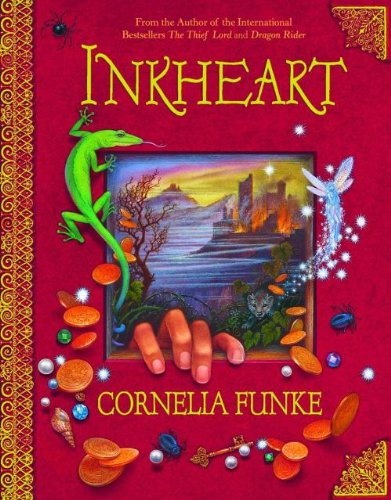
No.95 - Inkheart

Hello!

Firstly, I'm so sorry it's been so long! I've busy finishing my degree, but that's done now (hooray!) so I'm pleased to say that I can get back to reading for this project again!


I cannot understand why Inkheart by Cornelia Funke is not further up the list!? 95 out of 100 seems awfully low for such a good book! It deserves to be so much higher! It is a great read; a gripping, exciting, enticing and beautiful novel for ages 12+. It is a book within a book, a story within a story. Inkheart is not only the name of Cornelia Funke's novel, but the name of the book around which the story centres.

Have you ever wished the characters in a book would come alive and you could be part of their story? I know I have! But what if those characters were the baddies... Not sounding so nice now is it! For father and daughter, Mo and Meggie, this is their reality. When Mo reads Inkheart aloud the evil dictator Capricorn and his men appear out of the fantasy novel, changing Mo and Meggie's life forever.

I don't want to give too much away, as its a wonderful, interwoven story, and my description of what happens wouldn't fall close to doing it justice! You should all just go and read it instead!

What I can tell you is:

It is set in the Italian hills, in several little villages, which you can easily summon up in your imagination from the writing, which is lovely. I found the setting wonderfully refreshing, as so many books seem to be set in either the UK or America. It was really nice to explore a more European setting.

If you love books then this story is definitely for you! The humble book is treated like the most precious of jewels, and the words inside like priceless gold thread. Mo restores old books, taking care of them like sick and injured people. In turn his daughter Meggie has a similar affinity with them, keeping all her favourites in a secure box that she takes with her wherever she goes. They both have a habit of stroking a book before they open it, in a kind of greeting I suppose, which I think is a lovely thing and might even take to doing myself!!

There is a quote from another story at the beginning of every chapter. Funke has quoted the likes of Kenneth Grahame, Mark Twain, Robert Louis Stevenson and even Shakespeare to name but a few! Each quote she chooses foreshadows the contents of that chapter, linking her story with so many others, which I think is a really nice touch.

There is magic in this story! There are people disappearing in and out of books, there are fairies, and trolls and people made of glass. J.M Barrie's Tinkerbell even makes an appearance!

There are some really nasty characters too. Evil Capricorn for a start; and then some of his men are pretty horrible, for example Basta is someone you wouldn't want to meet on a dark night!

Inkheart is a fantastic tale of good and evil, with an edge that will entice any book lover. You feel the ups and downs of every character, and the heroine Meggy is a brave and powerful force! I would recommend this book to everyone, its been my favourite on the list so far. And, whats more, Inkheart is the first of a trilogy of books; Inkspell and Inkdeath are certainly on my 'to read' list now!

Next up, A Wizard of Earthsea by Ursula Le Guin, which, if the cover is anything to go by, could be quite bizarre......


Thanks for reading, L x