Wednesday, 12 October 2022

No.55 - Orlando the Marmalde Cat

It took me a long time to track down the book for this post. I was worried after a few internet searches that the only copies of this book available were first editions and original hardbacks. As beautiful as they were, I didn't have a spare £700 for the American First Edition, or £500 for the UK equivalent! Luckily I found a second hand copy, a Puffin reprint from 2014, on the World of Books website for just £6! I love used books, for the same reason I love the library. You can find a book, use it, and pass it on to someone else. It's a continuous cycle. This book will most likely be dontated to my local National Trust bookshop soon. 

The book I am talking about is of course Orlando the Maramlade Cat: A Camping Holiday, by Kathleen Hale. I had never heard of the Orlando books, but many people have told me they are classics. Hale wrote 19 Orlando stories, and this one was the first. 


 Kathleed started writing the Orlando stories to amuse her children, with Orlando being based on their own cat of the same name. They enjoyed them so much she decided to illustrate the stories and send them to a publisher. The first Orland story, A Camping Holiday was published by Country Life publishers in 1938. 

Initially I was a bit startled by the illustrations! They are bold, cartoon-like and the cats and humans often have very strange looks on their faces. Some seem to stare demonically out of the page at you! If I were small these illustrations would have scared me stiff! These cats sit on the uncanny border of cat and anthropomorphised animal, and I don't like it one bit! 

Published between 1938 and 1972 the Orlando books scream of a time gone by, when the patriarchy ruled and woman stayed in the kitchen. Grace, Orlando's wife is every bit the perfect housewife and mother, and their daughters Pansy and Blanche are also housewives in training. Again, that wierd uncanny borderline has been breached! Grace is depicted as wearing floral hats, head scarves and aprons, forever trailing behind Orlando, looking after the children or taking care of the housework. Orlando on the other hand clearly wears the trousers (or not!), keeping order with his watch on his tail. He is the head of the family, the patriarch and what he says goes! Orlando advises on where to put the tent, what activities the family will be doing, and he takes Tinkle, the boy kitten, out to show him how to fish. Quality father and son time, learning important providing skills! It's all a bit dated, but then it was written in the 1930s. 

The thing that intruiged me the most about these books was their age, and why the older editions were comanding such a price online? It turns out that the first Orlando story was the first book to be printed using the technique photolithography, which I don't totally understand, but it meant that the illustrations could be mass produced using the same printing plate. This was a massive pioneering step in the production of books, especially picturebooks. I also discovered that the second Orlando book, Orlando's Evening Out, published in 1941, was the first fictional picture book to be published by Puffin, the children's imprint of Penguin. This, for picturebook nerds like me, is very exciting indeed! Orlando oozes history! How had I not heard of him!? 

There were 19 Orlando books in total, and here are some of the more baffling titles: 

  • Orlando the Marmalade Cat: Buys A Farm
  • Orlando the Marmalade Cat: Becomes a Doctor
  • Orlando's Invisible Pyjamas
  • Orlando the Marmalade Cat: Keeps A Dog
  • Orlando the Marmalade Cat: The Frisky Housewife
  • Orlando Goes to the Moon
Some of these conjour up some interesting images don't you think!? 

Now lets turn out attention to Kathleen Hale, creator of Orlando. Kathleen was born in Scotland in 1898. When her father died, her mother took up his job as a travelling piano salesman! Kathleen spent most of childhood drawing pictures, whilst her mother was away selling pianos. She ended up studying art, doing illustrations for books jackets, picturebooks and posters. She lived in London and Paris, and mixed in artistic and bohemian circles, her friends included the Bloomsbury artists Vanessa Bell and Duncan Grant. After an exciting youth, she married a doctor and settled down in Hertfordshire, where she later had some children and a marmalade coloured cat called Orlando. Kathleen Hale OBE died in 2000 aged 101. 

Although I hadn't heard of Orlando the Marmalade Cat, I can see what an important part he played in the history of children's literature. Now these books of blissful feline domesticity seem a little outdated, but at the time Orlando was a literary trail blazer! 

Thanks for reading, L x

P.s - Next up is Malory Blackman's Pigheart Boy

Friday, 12 August 2022

No.56 - The Silver Sword

To my absolute disgust I had this book out from the library for the 18 months... I got it out right before the first UK lockdown, and had it for months after! And, do you know whats made me even more ashamed... It took me all that time to read it, and at least another year to post this!! So finally, here is my experience of Ian Serraillier's classic Second World War novel The Silver Sword


This is one of those children's books that hits you hard. It tells the story of the Balicki children, growing up in war torn Europe during WW2 and the Nazi regime, and their journey to be reunited with their parents. It often amazes me that childen's books can deal with these topics in such a careful, emotive way, without being overtly scary or disturbing. The authors manage to distill the topics, sites and sounds so that we feel all the emotions and tension without the adult themes. This is particuarly powerful when dealing with troubling themes for middle-grade readers. Ian Serraillier does this beautifully in The Silver Sword. 

Ruth, Edek and Bronia Balicki are left in war torn Poland after their father Joseph is arrested for his anti-nazi sentiments. After escaping prison he makes his way back to Warsaw only to find that his home and the neighbourhood he lived in has been bombed and his children are missing. Whilst looking in the rubble of his home he discovers a sword shaped letter opener that his wife had bought for him, but along with this discovery he also finds Jan, an orphaned boy, and his pet chicken, intent on stealing the shiny letter opener. Joseph agrees to let Jan keep it on one condition, if he ever sees the Balicki children he should tell them that if they make their way to their grandparents house in Switzerland he will meet them there and they will all be safe. 

I won't give away much more of the plot, because my description would not do the story justice at all. This story has twists and turns, well rounded characters and a sense of hope that can only be experienced by reading the book. And I'm not at all surprised, as this book is based on true events. Some place names have been changed, along with names of the camps that appear in the story, but overall the main plot of this book is based on true accounts of life in Nazi occupied Europe during World War Two. Without books like this it would be hard for modern children to understand exactly what their conterparts at this time went through. Children need to read about children, to relate to the characters that mirror their own ages' life experiences. This is why school stories are forever enduring. It is also why books like Carrie's War and Goodnight Mr Tom are used to educate children about the Second World War, and Ian Serraillier's book is no exception. Although children can't relate to the hardship of the Balicki children, they can relate the fact that they are children, and this is key. This book is another one of those enduring stories that will continue to be used in schools and recommened to children, because it is so authentic. Although it took me a while to get through it, I would read The Silver Sword again, and no doubt I would pick up on different details the second time around, which is great. It is a heartwarming, but also heart rending tale, and I really enjoyed it. Yes, Jan is stubborn and annoying, and yes, the girls are a little stereotypical, but that being said, the children are strong characters and you end up really warming to them and routing for them to get to their parents! But I wont spoil the ending for you! 

Thanks for reading, L x


No. 57 - Elmer

It's been a while since I posted anything on here. My personal life has been so busy, as well as working part time now too, so finding time to blog has been difficult! But I'm feeling in need of a focus right now, so here I am! 

I have been excited about this one because Elmer is one of my all time favourite elephants! In fact, he's one of my all time favourite characters, in one of my all time favourite books! I give you Elmer by David McKee!


This bright and vibrant tale of identity is a classic for a reason, it speaks to anyone and everyone, and the message is loud and clear - BE YOURSELF!

The story of Elmer was conceived after McKee's young daughter was the victim of racist verbal abuse. Devastated by this racist attack towards his family, McKee decided to write Elmer, and it has become a key book for teaching children about valuing each other's differences, about prejudice and indeed, racism. McKee took this theme into the other Elmer books too, writing about immigration, amongst other things, and in his early work Tusk Tusk, where he addressed both war and racisim. 

Elmer has even been hailed as an LGBTQ+ icon, something that McKee never had in mind when writing the books, but seems to have happened over time! And why not!? Elmer is all about acceptance and inclusivity, and celebrating the things that make us us. 

My favourite page is the one where Elmer has snuck back into the heard and is looking at all the boring, grey elephants. He suddenly realises how absurd it is to try and fit in! This of course, can be a big turning point in a person's life, and McKee pin points it exactly. There is a huge feeling of liberation and acceptance in Elmer's loud "BOOO!"

McKee had a knack of subtly weaving these themes into this work. It is obvious Elmer is all about celebrating difference, but it is not done in a way that makes it the main focus. Elmer is always the main focus. Children learn from Elmer's actions, not what is written in the text, and that is a very clever what of delivering a tricky message. 


Readers may well know by now that I love a fact! So here are some Elmer facts for you! 

  • There are 22 Elmer books, and a lot more merchandise!
  • There have been over 10 million Elmer books sold worldwide since it's publication in 1989.
  • It has been translated into 50 different languages.
  • There actually is an Elmer Day! It appears to be the last Saturday of May, so mark that calendar!
  • In 2019 there was an Elmer stage show, with puppets!


For me Elmer will always be the fun loving elephant, proud of his colourful countenance. A happy chap, who holds friendship close, and is kind to everyone, no matter what. I am even more fond of him now I know what he means to other communities and where the initial inspiration came from. Every child should be read Elmer, infact everyone should read Elmer! The life lesson that can be taken from just those few picturebook pages is incredibly valuable. 

Thanks for reading, L x

Ps. Next up, The Silver Sword by Ian Serraillier


Wednesday, 10 August 2022

Comfort Zones in Children's Literature

Comfort zones are a big thing for everybody. Whether you're a child or an adult, there's something about moving from the unknown to the known that scares us all, deep down. That step away from the stable and secure, be that trying something new, going to school for the first time, or starting a new job. It's scary! What will it be like? How will you cope? Who will you meet? Endless questions! At the moment I am feeling somewhat stuck in a comfort zone that I have neatly curated for quite some time, and it made me think about how comfort zones are portrayed in children's literature, because of course, this is often my first route of enquiry.

My first thought was of dear Mole in The Wind in the Willows, spring cleaning his little hole, when all of a sudden he decides enough is enough, "Hang spring-cleaning" he mutters and scrabbles out into the open fields above him, ebracing life above ground. He does it, pushes out of his comfort zone! He has moments of fear, where no doubt he wishes he could disappear underground, don't we all! But most importantly Mole shows us that's its ok to falter, and its our inner strength that helps us continue onwards.


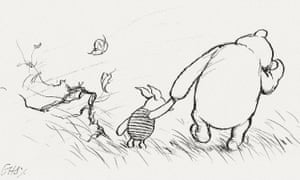
Then I though of timid Piglet, always one step behind Pooh bear, his living, breathing comfort zone. A friendship that was more than just two pals. They made each other braver and stronger somehow and together they were able to traverse the boundaries of their comfort zones to hunt woozles and heffalumps, as well as deal with Tigger on a daily basis! 


Both Mole and Piglet show us that courage comes just beyond your comfort zone, and it's always easier with the support of others. 

As my brain delved deeper into the idea of comfort zones in children's books I starting thinking about the concept of growing up and how many children's books written during the Golden Age of children's literature made a clear distinction between child and adult, and many books such as Little Women, were written to eductate children in the art of becoming an adult, or navigating the transition between childhood and adulthood. In Little Women Alcott is showing us what it is like to grow up, the moral trials and tribulations, as well as the practical expectations for the 19th century woman. We see the girls' grow away from the comfort zone of Marmee to become women in their own right, however, I would argue this is only successful for Amy and Jo, who take up independant careers and an artist and teacher, respectively. Beth, unfortunatley never makes it to adulthood, she is too entrenched in the comfort zone of home that she is forever trapped there, always rememebered as the shy, sickly child she was in life. Meg becomes a comfort zone in her own right, taking on the Marmee role as the book progresses, something more expected at the time the novel is set. 


On the reverse of this is Peter Pan, J.M Barrie's 'Boy Who Never Grew Up'. His relationship with adulthood is very different. He refuses to accept the notion of growing up, the biological fact that children grow into adults. A lot of this characterisation is down to Barrie's own relationship with adulthood and his own personal comfort zones. Barrie was traumatised by his brothers death when he was a child, and the subsequent effect this had on his mother. He himself retained some childlike traites in his adult personality, an attempt a reliving the life he had before his early trauma, his comfort zone. Many historians have suggested that Barry was asexual, and that his attitude towards growing up was closely linked with his sexuality. He believed that once you had crossed the boundary into adulthood (mainly through sexual acts) that there was no way of getting back to childhood. This idea can be seen wholeheartedly in Peter Pan. The nursery is a comfort zone, and although the Darling children travel from it's confines to Neverland, this is Peter's domain, where adulthood (depsite Wendy playing at Mother) is no where to be seen. A fantasy comfort zone that insures adulthood will never get in. 


Thinking more on the idea of comfort zones I also considerd the idea of the physical book too. Do you have a book that you return to again and again? An escapism that has in some way become a comfort zone. I know I do. For me it's the world of Winnie the Pooh, and a fictional diary called A Diary of a Nobody by George Grossmith. When i'm a bit down, or unsure what to read next, I will always reach for one of those books. They make me laugh, and slipping into their pages is like slipping into a pair of snuggly socks or clean sheets. It's magical, and of course extremely comforting! For children there will always be books that they will want to read again and again, or a series that they really get hooked on. For adults you may return to books you read as a child to feel comforted or reassured. It's natural for humans to want that comfort, support and reassurance of the known. This is why stepping outside our comfort zone is really hard. 

The children's adventure or school story genres often hold an element of comfort zone expansion, of pushing beyond what they know or what parents have set as the boundaries, and often the protagonsists of these books do it without batting an eyelid! The innocence of childhood in these stories seems to take away any fear of the unknown that we might have as adults. Re-reading some books I often find myself projecting my own fears and anxiety onto the characters. Why are they doing that? What will be the consequences of those actions? Who should or shouldn't they trust? Is this blatent disregard for the unknown good for children? Is it teaching them to have a growth mindset or to be plain reckless!? Nowadays I think there is a lot more phsychology involved in the actions of characters in children's books. Children are no longer just 2D stereotypes in stories that like to sail, or act the spy. Children's books now address a lot broader range of themes, questions and societal issues, all of which at points will deal with the idea of the comfort zone in some way or another. Books for children, and more often teens, nowadays address issues such as loss, grief, sexually, violence, crime and drug abuse. There is almost no topic out of bounds anymore! They are instruction guides to growing up, cheat sheets for big life decisions; books for big emotions. Children growing up today are so incredibly lucky that they have literature that addresses issues they might come across and helps them navigate life. Comfort zones have been replaced with topics that make us think and feel, rather than settle down in a cosy corner. I sometimes wonder if this is a good thing? But I suppose things move on. Like life. We must move on, push forward out of that comfort zone like Mole; free ourselves and good things will happen.

"This day was only the first of many for the emancipated Mole, each of them longer and fuller of interest as the ripening summer moved onward." 

Thanks for reading, L x

Friday, 19 February 2021

No. 58 - Anne of Green Gables

So, here we are again, in the depths of another national lockdown. I'd like to say I'd found myself turning to books for solace, for escapism and adventures with old friends, but sadly this has not been the case. I long to dally with Pooh and Piglet, and imagine I'm Miss Honey teaching the amazing Matilda, but alas.... Instead I have been very busy working, and trying my best to keep my creative juices flowing in my spare time. There really has been no time for reading! This lockdown feels very different to the last, where I lost myself in the pages of friends old and new, and sat sunning myself in the unusually warm April air listening to audiobooks. 

I suppose I'm trying to apologise to you, and to myself, for not getting on with this blog after such a good start last year. The blog is in it's 5th year now, and although I'm nearly half-way through the list, I feel like I've slowed down again. I'm going to try and change this! I will try and liven up the Instagram page more (@the.littlebookworm if you're interested), and maybe even try a few live readings, or Youtube clips if I'm feeling brave! I still have lots of ideas I want to share with you all, I just need to find the time! 

It's taken me a long time to get through it, but finally I have finished book number 58, Anne of Green Gables by L.M Montgomery. 

How beautiful is this cover!?


Now, I know lots of people have fond memories of this book, and it appears again and again on lists of the best children's books, but I'll admit that I didn't enjoy this book. I found Anne a little annoying, and the tone of the writing somewhat patronising. But as I have said on many occasions whilst writing this blog, I never expected to like every book on the list! 

I'll start with a quick synopsis. Set in 19th century Canada, the story focuses on our heroine Anne Shirley. Orphaned Anne is sent to live with the dowdy Marilla Cuthbert and her brother Matthew. Anne is full of flights of fancy and imagination, quite a contrast to the straight talking, serious Cuthberts, in particular the matriarch Marilla. The story then follows Anne's new life in Avonlea, her schooling, her friendships, the ups and downs of growing up. It has all the hallmarks of the typical coming of age story; success through adversity, rags to riches, self-made success and determination. We see it time and time again in children's literature, though quite often the characters are boys. 

Instead, L M Montgomery follows in the footsteps of American author and children's literature VIP Louisa May Alcott. Like Alcott's March sisters, Anne is quite the character, with her very own set of opinions about life. She has her vices, much like Alcott's girls, in particular vanity! She is always wishing she was someone else, or her hair was a different colour, or her nose a different shape! Unlike Alcott's sisters however, I never really felt like Anne lost these traits, she remained just a little self-obsessed throughout the whole book! Even at the end, despite seeming selfless she gets her own way!

And it wasn't just her actions that I found hard to endure, but the way the book was written! I'm sorry, but I told you this book was a tough read! Anne talks way too much! And I mean waaaay too much! Most of the first part of the book is dialogue, just Anne chatting about everything and anything! I understand that this is meant to show her excitement about her new life, and her realisation that life will be good to her in Avonlea, but even so, sometimes you just need a break for breath! If I was a child reader I think this incessant chatter would be something I would struggle with and find a little overwhelming to read. For others, it may not bother them, after all it is part of creating Anne's character I suppose. But I personally found it a bit too much. 

The story itself bumbles along fairly predictably, with a new adventure in Anne's life in each chapter. She has some rather predictable domestic accidents, a few physical accidents, she worries about dresses, bosses people around, and is extra (as the kids say), about just about everything! 
 
When Montgomery wrote this book however, Anne was a radical character, forging her own path in a man's world. Through her own intelligence, hard work and determination, Anne becomes a teacher, one of the few accepted vocations available to women at the time. I think she would have got on with Jo March don't you? Of all Alcott's Little Women, Anne definitely reminded me most of Jo. She is feisty, fiercely intelligent, not scared to speak her mind and insanely aspirational and driven! I wonder whether this is purely coincidence, or was Montgomery inspired by Alcott's novel? 

If you like Little Women, then the chances are you will enjoy Anne of Green Gables, it is very much  part of that canon. Although I didn't personally like it, I can see how it would appeal to others, and how Anne's journey from a self-indulgent, orphaned fantasist, to a slightly less self-indulgent, successful, ambitious young lady has come to be an enduring classic. 

Thanks for reading, L x

Next up one of my absolute favourites, the wonderful Elmer, by David McKay!


Monday, 28 December 2020

Jolabokaflod - My Thoughts on a Icelandic Tradition


It's that time of year again, where I usually do a round up of the books that I gave and received this Christmas, but funnily enough this year was not so book heavy! Unusual for our house. Maybe it was because we'd done a lot of reading already this year, what with lockdown! Or maybe it was because we gave and received more practical, or even more indulgent presents, because of the kind of year we've all had! I for one, got lots of cosy socks and PJs, which says a lots really! But what about books? Aren't they an indulgent gift, don't they go hand in hand with the cosy socks and the PJs? Well yes, I would agree with that! But, I also now feel well equipped to snuggle down and read all the books on my to-read pile! So maybe I didn't need any new books this Christmas, just the accoutrements to enjoy what I already had, which seems pretty fitting for 2020. 

That being said though, I have just discovered a Icelandic tradition that I have 100% fallen in love with! Jolabokaflod! Or the Christmas book flood! It's no surprise to anyone who knows me, that I have taken another Nordic tradition to heart! I love a bit of Hygge and Fika, so why not Jolabokaflod!? Let me explain... 

So on Christmas Eve it is tradition in Iceland to give each other books as presents. This started in the 1940s when paper was one of the only things that wasn't rationed in Iceland during the war! Thinking it sounds like a good tradition good so far? It gets better! Once you have received your book (or books if you're lucky!) the rest of the evening is spent snuggled up reading them, in the warmest, cosiest, place you can find! With, of course, a compulsory hot chocolate and even a roaring fire! What's not to love!!??


I reckon this is a tradition we could all embrace! Not only is it the loveliest way to spend an evening with your loved ones, it also encourages people to switch off their phones, other devices, televisions, stop worrying about what time the turkey needs to go in the oven the next morning, or whether you've bought enough booze for the festivities! It just allows for us to be present in the moment, and frankly we all need a bit of that these days! If this year has taught us anything, it's that if we slow down, linger a little longer, open our eyes, then the world has so much more the show us and for us to experience, and the best thing is, it's right under our noses. So why not incorporate an element of Jolabokaflod into our lives? It could be as simple as recommending a good book to a friend! Or in true Jolabokaflod style why not gather up all your cosiest things, a snuggly blanket, and a hot drink of your choice and get lost in the pages of a book. You'll find that it's very good for the soul, but then I think you already knew that...

Thanks for reading, L x


Thursday, 5 November 2020

No.59 - Guess How Much I Love You


This book really doesn't need any introduction! It's a modern classic, a feature of nursery's everywhere, an national treasure, it's words implanted into our psyche; 'I love you this much', 'I love you to the moon and back'. It is of course the wonderful Guess How Much I Love You by Sam McBratney, with gorgeous illustrations by Anita Jeram. 


I didn't actually realise how old this book was! If you'd asked me I would have put it's publication date at around 2008 or 2009, but in fact it was published in 1994 and last year it celebrated it's 25th birthday! I would say that anybody born in the last 25 years probably had a copy of this book, and apparently it is still one of the most popular books to gift for a new baby, along with the crazy amount of merchandise available! 


To give you an idea of just how big the Guess How Much I Love You brand is, I hopped onto their website, guesshowmuchiloveyou.com for the facts. 
  • It's sold more than 50 million copies worldwide.
  • The story has been translated into 57 different languages.
  • There are board books, paper backs, fabric books, finger puppet and hand puppet books, spin-off seasonal editions, baby books and milestone markers. 
  • There is a new story starring Little Nutbrown Hare, that came out in September, called Will You Be My Friend.
  • The story is quickly becoming a popular wedding reading with couples. 
  • There are different editions for valentine's day and wedding presents. 
  • In 2011 it was adapted for television and shown in 60 different countries.
  • The brand has been licensed to shops like Sainsburys, Matalan and Next to be used on their baby clothing.
  • There is a beautful gold and silver jewellery range, including engagement and wedding rings!
  • The famous pottery, Moorcroft, have a Guess How Much I Love You range, so you can have your favourite hares on a vase if you like!
That is by no mean as an exhaustive list of all the Guess How Much I Love You facts and merchandise, but it shows you just how big this book is! Big Nut Brown Hare and Little Nutbrown Hare have a huge place in our hearts. 


Now to the story. It is basically the tale of two hares who are trying to put into words their love for each other. Originally intended as a parent and child, many people have interpreted this book as a way of showing anyone, be it a relative or a partner, just how much you love them! Little Nutbrown Hare starts by asking the big hare, who I've always presumed was his Daddy, to guess how much he loves him? Then they start trying to describe their love for each other in ever increasing distances; as wide as their arms can stretch, as high as they can reach, as high as the little hares toes, as high as they can hop, all the way down to the river, across the hills, right up to the moon, and back. As much as Little Nutbrown Hare tries, he can never beat the distance that Big Nutbrown Hare loves him, because you can't get a greater love than that of a parent for their child. 


I would thoroughly recommend that everyone reads this book, buys it for their own baby, gifts to a friend having baby, even gifts it as a wedding! Why not! This book celebrates love, with it's simple, touching phrasing and it's effortlessly beautiful illustrations. It is surely an enduring classic that I hope will never fade. Sadly the author, Sam McBratney died in September, but he has left behind a truly special legacy in Guess How Much I Love You.


Thanks for reading, L x

Next time, we're closing in on the half way mark, with another classic, Anne of Green Gables. 


Saturday, 31 October 2020

Halloween Treat - Funnybones!


"This is how the story begins.
On a dark dark hill
there was a dark dark town.
In the dark dark town
there was a dark dark street.
In the dark dark street
there was a dark dark house.
In the dark dark house
there was a dark dark staircase.
Down the dark dark staircase
there was a dark dark cellar.
And in the dark dark cellar....

... some skeletons lived."

 This is by far, in my opinion, one of the most iconic openings to any children's book EVER! But then I am a little bias! Although 40 years on it is still a much loved story and I would bet has been read to most of the people in this country at some point in their lifetime. And if you're anywhere near my age, you probably grew up watching the brilliant animated series too (hop on Youtube if not!). It is of course the wonderfully spooky Funnybones by Janet and Alan Ahlberg! 


 As it is Halloween I thought I'd throw in a themed post this week, and so I raided my collection for something suitably scary! And when I say scary, I mean downright adorable! What's not to love about these skeletons and their dog? They have all the hallmarks of a classic comedy double act, one's little, one's big, they share a bed like Morecambe and Wise or Bert and Ernie, and of course one wears a silly hat! It's perfect! 

I'm sure you all know the story of Funnybones, but i'll give you a little reminder. The skeleton's decide to take the dog for a walk and scare someone while they are out. They end up in the park, where unfortunately the dog has a little accident and ends up as a pile of bones! Cue my favourite scene, where they have to try and put the dog back together, with hilarious results! I've always loved the set of illustrations here, and the idea that the bark depends on how the dog is assembled!


After they have successfully put the skeleton dog back together they go off looking for someone to scare. But the problem is everyone's asleep! Everyone except the skeleton animals in the zoo. Obviously. So they have a bit of fun there riding an elephant and chatting to the parrot.


But what's a good night out without scaring someone?! Probably very dull, if you're a skeleton! The few pages that follow are fab! Big and Little decide to scare each other, for lack of victims! They jump out from behind bushes at each other, hide in washing, and the dog chases them! It turns out they're massive scaredy-cats! 


I just want to say how much I love the illustrations in this book! They are absolutely charming, much like all of the Ahlberg's picturebooks. They are simple, playful, and vibrant. They make use of framing so well, and you get the feeling of reading not only a picturebook but also a comic. In Funnybones in particular their choice of colours is really effective. As we are told at the start, this story takes place in the dark, at night. Therefore a lot of the text is set against a black background. The use of white text, not only matches the colour of the skeletons, but also shows us what writing looks like in the dark! For the child reader this is probably not that obvious, but as an adult reader I see it as a lovely little nod to the way a child thinks. How else would your story show up!? These bold contrasts and brightly coloured illustrations make it an excellent books for all ages, from something that is visually stimulating for younger listeners, to the clear simple text and repetition for the early reader. This book has it all! 

Happy Halloween! 

Lx

Ps. Back to the list next time for the classic modern picturebook Guess How Much I Love You

Thursday, 1 October 2020

No. 60 - The Little White Horse

Hello!  

Today I want to talk to you about Elizabeth Goudge's book The Little White Horse. The reason this post has taken so long for me to write, is because it has taken me since June to read this book!! The Little White Horse has both confused and delighted me!


    Not being a lover of fantasy stories as a child I think The Little White Horse had passed me by. To my shame, I had no idea what a classic it was; it won the Carnegie Medal in 1946, quite the accolade in the children's book world! Once I knew this, I set out with quite high hopes for this book, but found it a lot like Marmite! It seems you either love this book, or it's not to your taste! I'm in the latter camp I'm afraid, although it has had it's moments! 

    Now, the premise, as I understand it, (and bear with me here!) is that Maria, our heroine, has been sent to stay with her Uncle, Sir Benjamin Merryweather, because she is orphaned. She is accompanied by her stuffy governess Miss Heliotrope, and her faithful canine chum Wiggins. Although a nice change from London, there is another reason for her visit, which Maria must discover as her time as Moonacre Manor plays out. Something to do with moon maidens, a particularly nasty Frenchman, and lots of pink Geraniums! It's safe to say that I found this story really quite confusing, and if I'm totally honest, I'm still not quite sure about the finer points of the plot! What I can say though is that this book is truly bizarre, and for that reason it wasn't all bad!

    For a start it reeks of the Gothic and other classic genres! I found it channeling everything from Wuthering Heights to Dracula, with hints of The Lion, The Witch and The Wardrobe, The Secret Garden, and the Chrestomanci series, not to mention Five Children and It! It also has a time slip fiction feel to it too, which had me rather confused about what time period it was set in. It feels Victorian, yet there is an older vibe too (it took me way too long to work out that Maria's friend Robin wasn't a ghost!). Maybe the time period is undisclosed, who knows! It is fantasy after all! Or is it...

    This was something else I struggled with! I felt as though it was never fully committed to being a fantasy novel. Sometimes it was just normal, everyday life, and then there would be crazy moments, like when the cat shot great big, green beams of light out of his eyes! Yes, that really did happen! This book was full of surprising moments like that. Just when you think you're getting the hang of the story, Goudge springs another thing on you! 

You know Wrolf, the big old dog? 

Yeah..? 

Well he's actually lion, but no one ever notices!

What!? How can you not notice a lion walking about next to you, FOR MORE THAN HALF THE BOOK! 

    And then there was the unexpected, and frankly excessive use of the word cock!! The Men of the Black Cock (no laughing please!) are the Merryweather's sworn enemy, and their emblem is a big black cockerel. Whilst reading I came across cocks on people's shoulders, cock shaped swords, cocks on boxes, on boats! At NO POINT does Goudge use the word cockerel, and honestly, I think she did it on purpose! Let's just hope that her particular choice of vocab goes over the heads of the intended audience! It made me laugh though!! 

    The characters in The Little White Horse are wonderfully stereotypical. Maria is a spoilt child from a London household, used to the finer things. Miss Heliotrope the governess is the archetypal Victorian old maid and school mistress, and she's always getting Maria to practice her needlework, or read poetry. Although we do discover that Miss Heliotrope had an exotic past! Sir Benjamin is the usual big, blustery, jolly, aristocrat. He's not so keen on women, but dotes on Maria. And then there's dear old Digweed, the coachman/man servant, who scuttles around in the background like so many versions of this trope before him. The Old Parson feels like he is straight out of a Jane Austen novel! And the children of Silverydrew are always bursting into song like the chorus of children in an am-dram production! It's all very strange! The only characters that seem to break this conventional mould are Robin and his mother Loveday Minette. They are otherworldly, magical, and I'm not sure whether this is intentional or not. They almost feel like they've stepped out of another novel completely! It's safe to say that they were my favourite characters.

    But, despite the confusing plot, bizarre, if not slightly stereotypical characters, Goudge finishes the story quickly and neatly with 3 weddings. Long lost loves are reunited, Maria and Robin are married (despite Maria being, by my calculations, only 14!), and peace is restored to Moonacre Manor, the village of Silverydew, and the Merryweather estate. Goudge makes sure all loose ends are tied, and it's wonderfully predictable after the confusing chaos of the rest of the book! Everyone lives happily ever after! Hooray! 

    Overall, I found this book a confusing read! It's weirdness baffled me, but strangely this in itself was quite enchanting! If you think you have the patience then I suggest you try this book, but I think it appeals only to a certain kind of mind. I'm not a lover of fantasy and I think this may have been why I struggled with the plot so much. Even after writing this, I'm still not sure I totally understand what I've just read! 

Thanks for reading, L x

Next up, a book that I'm sure is on bookshelves everywhere, Guess How Much I Love You by Sam McBratney


Monday, 15 June 2020

Where the Wild Things Are

Hi everyone!

I have news, there is now an Instagram page for The Little Bookworm! Check it out @the.littlebookworm

I'm hoping to post all kinds of interesting things there, and maybe even do some live story times too! 

This post has been inspired by my lastest Insta post, which was to celebrate the birthday of the marvellous Mauric Sendak! His picturebook Where the Wild Things Are really ignited my passion for picturebook analysis, and my interest in the relationship between words and images in the picturebook format. There is so much more to a book than meets the eye and I find this so incredibly exciting! Once you know all the little codes and tricks you never look at another picturebook in the same way again! 
So for this post I thought i'd do something a little bit different and share some of my academic writing with you, on the subject of Sendak's Wild Things. The extract I want to share with you is all about the 'Picturebook Codes' as created by William Moebius. It is all about how the positioning of images on the page help to tell the story, and how text and image can work together, or indeed against each other, to create a narrative. I hope you find it an interesting insight into what it's like to study children's literature at a higher level. 


The centre spread (above) of Maurice Sendak’s celebrated picturebook Where the Wild Things Are (1963) is a clear example of what Moebius terms as ‘semic slippage’. This occurs when the images and text presented to the reader contradict each other, creating differing perspectives (Moebius, 2009, p.313). The image shows Max’s first encounter with the mythical creatures of his imagination (Sendak, 1963). The accompanying text says ‘they roared their terrible roars and gnashed their terrible teeth and rolled their terrible eyes and showed their terrible claws’ (Sendak, 1963). This creates a frightening image suggestive of other magical or fairy tales, in which the monster is a threat to the child protagonist. The emphasis placed on the frightening physical features of the creatures is not unlike the dialogue between the wolf and Little Red Riding Hood in the classic fairy tale. The text takes the conventional stance expected of a fantastical tale, but the illustration presents a contradictory image. Max is actually greeted by four friendly looking monsters that appear to be smiling and waving. They are not ‘terrible’ at all, and it is clear that Max is not scared of them. This juxtaposition between classic fairy tale text and the surprising imagery creates irony.
The text tells us that Max has arrived in ‘the place where the wild things are’ (Sendak, 1963). But as William Moebius points out, ‘What is a wild thing?’ (Moebius, 2009, p.313). By not capitalising ‘the wild things’ Sendak creates confusion around this phrase, sending ‘contradictory messages about the ‘who’ or the ‘what’ of the story’ (Moebius, 2009, p.313). On one hand it implies that the creatures are the wild things, but on the other it could be referring to Max whom the creatures later name ‘the most wild thing of all’ (Sendak, 1963). In the illustration the creatures look quite tame despite their fangs, horns and claws, and have big wide yellow eyes. Angry looking Max seems more of a threat to the creatures, than they are to him, despite their frightening textual descriptions. In fact Max looks rather unimpressed with their appearance, particularly as they are figments of his own wild imagination. By applying ‘the code of position’ as set out in Moebius’s essay Picturebooks Codes, it can be suggested that Sendak’s placement of the image in the top two thirds of the page is indicative of a ‘dream-vision’ (Moebius, 2009, p.316-17), a world from Max’s imagination. This imaginative quality is suggestive of the fairy tale or legend that the text seems to embody, but again creates confusion as they do not correspond.
The illustration shows us a more complex story of arrival than that of the text, which simply tells us ‘he came to the place’ (Sendak, 1963). The ‘code of position’ can again be applied to the image, in reference to the direction in which Max and the creatures are facing on the pages. Max has arrived from the left hand side, indicating that his journey has finished and that he is ready to continue his adventure across the page to the right. His left hand arrival also suggests that he has come from the stability of home and is continuing into the unknown. The stability of home, however, is tainted by Max’s anger and frustration, which is signified through the turbulence of the sea. This is contrasted with land, which is solid and much calmer. The monsters approach from the right hand side, indicative of their wild lifestyle, and move towards the stability of the left hand page and Max whom they will soon appoint as their King. Max wants to escape from the confines of home and become a true ‘wild thing’, whereas the monsters want some stability in their wild lives. These ideas are not conveyed at all in the text, which focalises Max as the child protagonist of a conventional fantasy. Whereas it could be argued that the illustration focalises the creatures and their emotional needs. The contrast between the text and image of this double page spread creates two varying perspectives.

So, as you can see, what seems to be a conventional fairytale story has a lot more layers once you know where to look! If you're interested in finding out more about William Moebius's 'Picturebook Codes' there's a great slide show here outlining all the codes in an easy to understand format! Or, you could track down the original essay 'Picturebook Codes' and give it a read.  

I hope you've enjoyed this little insight into the study of picturebooks, and can understand why I find it so interesting!!
I challenge you to pick up a picturebook and have a look for a few of Moebius codes, and see how it transforms your reading! 

Thanks, L x 


Thursday, 4 June 2020

The Summer Reading Challenge 2020 - The Silly Squad!

The Summer Reading Challenge starts today and I am so pleased that it's still on! 


This year join the Silly Squad, a madcap gang of animal friends, brought to life by Laura Ellen Anderson of Amelia Fang fame! The theme is humour and silliness, and so it's all about celebrating books that make us laugh! My favourite! All you have to do is sign up (as a child or a parent or carer) online at www.sillysquad.org.uk 
Like usual, the challenge encourages children to read as many books as they can in a set time period, earning badges and achieving goals along the way, except that this time it's all done online. This unfortunately means there will be no access to library books, so what will children be expected to read? Well, your local library service should have a selection of eBooks to choose from, and there are some wonderful platforms that these can be read on. For example I use a great app called Borrowbox, which I would strongly recommend. All you have to do is sign up using your library card and you can start borrowing. You can get both eBooks and audiobooks on Borrowbox, which is brilliant! Children can also re-read books that they already own, so why not get them picking out their favourites and revisiting them! Every book they read needs to be logged on their profile so that it counts towards their Silly Squad journey. 

Today, 5th June, is the start date, and if you're quick you can get in on the launch party action this afternoon on Facebook! Here's the schedule!

4.00pm - Sam & Mark (as seen on CBBC) launch the Summer Reading Challenge 2020 and introduce you to the Silly Squad - telling you how you can sign up and start your seriously silly summer

4.10pm - Comedian, author and presenter, David Baddiel, reads from his children's book The Taylor TurboChaser

4:15pm - Author Gareth P Jones reads from his book Dinosaur Detective: Catnapped! and takes us on a real adventure

4:20pm - Drawing with award-winning author and illustrator Rob Biddulph

4:30pm - Poet and author Joseph Coehlo reads Funny Fish from his book Poems Aloud

4:35pm - President of Libraries Connected, Carol Stump, reads a book from the official 2020 Summer Reading Challenge booklist - You Can't Call an Elephant in an Emergency by Patricia Cleveland-Peck & David Tazzyman

4:40pm - Crafts, colour and creativity with the original queen of colouring, Johanna Basford

4:45pm - Authors Katie and Kevin Tsang read from their book Sam Wu is Not Afraid of Zombies - including some super silly dress up!

4:50pm - Let's Get Silly with longest-serving female BBC Blue Peter presenter and author Konnie Huq

4.55pm - Presenter, author and adventurer, Ben Fogle reads an extract from his Mr Dog book series

5:05pm - The British Library shares content from their Discovering Children's Books website where you can find a whole range of creative activities. In this video, Viviane Schwarz shows you fun ways of developing silly characters

5:10pm - How to Build a Super Silly Reading Den with BBC's Katie Thistleton and Hacker T Dog

5:20pm - Children's author Philip Ardagh reads from his book Bunnies on the Bus

5:25pm - Arts Council England's Director of Libraries, Sue Williamson, reads her favourite poem

5:30pm - Silly Squad draw-along with author and illustrator, Laura Ellen Anderson, who is the Summer Reading Challenge 2020's official illustrator!

5:40pm - Award-winning comedian, actress and writer Samantha Baines reads from her novel Harriet Versus The Galaxy

5:45pm - Konnie Huq gets super silly with the Silly Squad

5:50pm - Shed School Magic with the nation's favourite teacher, Mr Bates

6pm - The nation's favourite comedian and presenter Paul O'Grady will read an excerpt from his favourite children's book, The Borrowers

6:05pm - Author Jennifer Killick reads from her book, Alex Sparrow and the Zumbie Apocalypse and shows us how to do a very silly dance - join in!

6:15pm - Children's author (and game designer!) Gabrielle Kent reads from her book, Knights and Bikes

6:25pm - Actor Owen Teale (Game of Thrones) reads from his favourite book, A Child's Christmas in Wales by Welsh poet Dylan Thomas.

6:30pm - Jokes with our Ambassadors! Including Quick Reads 2020 author Milly Johnson, Samantha Baines, and Konnie Huq

6:35pm - Actor and writer Shobna Gulati (Dinner Ladies, Coronation Street) will read Tiny Ant from the Official Book Collection

6.40pm - Author and illustrator Laura Dockrill shares her favourite poems including her own poem My Mum's Growing Down as well as one by Benjamin Zephaniah from Talking Turkeys and a Carol Ann Duffy poem!

6.45pm - It's time to hear the official 'Let's Get Silly!' theme song! Written and performed by Harry Baker and Chris Read

6:50pm - Closing the Launch Party with a bedtime story, actor Charlie Condou (Holby City, Coronation Street) reads This is Gus from the official Summer Reading Challenge book collection

7pm - End

Personally, I'm loving the sound of a draw-along with Rob Biddulph! Has anyone been watching and joining in with Draw with Rob during the lockdown? And Paul O'Grady reading from The Borrowers will no doubt be magical! Plus, you can't have silly without Hacker T. Dog! 

Although it's a real pity that the Summer Reading Challenge wont be taking place in our libraries this year, the online version has a lot of great added extras! For a start it will be running for a much longer period, from June to September! So there is loads of time to get silly! There are also puzzles, games, quizzes, bonus content and an online book discussion forum too! There is even a book sorter to help children choose their next read. So, although it is a little different to what we are used to, this year's Summer Reading Challenge looks set to be a good one! 

I'm really glad they've chosen humour as the focus for this years challenge, I think it's what we all need right now! And on the theme of silliness I'd like to leave you with one of my favourite quotes from the great Roald Dahl, and something we should never forget. 


Thanks for reading, L x