Showing posts with label classic children's literature. Show all posts

Friday, 12 August 2022

No. 57 - Elmer

It's been a while since I posted anything on here. My personal life has been so busy, as well as working part time now too, so finding time to blog has been difficult! But I'm feeling in need of a focus right now, so here I am! 

I have been excited about this one because Elmer is one of my all time favourite elephants! In fact, he's one of my all time favourite characters, in one of my all time favourite books! I give you Elmer by David McKee!


This bright and vibrant tale of identity is a classic for a reason, it speaks to anyone and everyone, and the message is loud and clear - BE YOURSELF!

The story of Elmer was conceived after McKee's young daughter was the victim of racist verbal abuse. Devastated by this racist attack towards his family, McKee decided to write Elmer, and it has become a key book for teaching children about valuing each other's differences, about prejudice and indeed, racism. McKee took this theme into the other Elmer books too, writing about immigration, amongst other things, and in his early work Tusk Tusk, where he addressed both war and racisim. 

Elmer has even been hailed as an LGBTQ+ icon, something that McKee never had in mind when writing the books, but seems to have happened over time! And why not!? Elmer is all about acceptance and inclusivity, and celebrating the things that make us us. 

My favourite page is the one where Elmer has snuck back into the heard and is looking at all the boring, grey elephants. He suddenly realises how absurd it is to try and fit in! This of course, can be a big turning point in a person's life, and McKee pin points it exactly. There is a huge feeling of liberation and acceptance in Elmer's loud "BOOO!"

McKee had a knack of subtly weaving these themes into this work. It is obvious Elmer is all about celebrating difference, but it is not done in a way that makes it the main focus. Elmer is always the main focus. Children learn from Elmer's actions, not what is written in the text, and that is a very clever what of delivering a tricky message. 


Readers may well know by now that I love a fact! So here are some Elmer facts for you! 

  • There are 22 Elmer books, and a lot more merchandise!
  • There have been over 10 million Elmer books sold worldwide since it's publication in 1989.
  • It has been translated into 50 different languages.
  • There actually is an Elmer Day! It appears to be the last Saturday of May, so mark that calendar!
  • In 2019 there was an Elmer stage show, with puppets!


For me Elmer will always be the fun loving elephant, proud of his colourful countenance. A happy chap, who holds friendship close, and is kind to everyone, no matter what. I am even more fond of him now I know what he means to other communities and where the initial inspiration came from. Every child should be read Elmer, infact everyone should read Elmer! The life lesson that can be taken from just those few picturebook pages is incredibly valuable. 

Thanks for reading, L x

Ps. Next up, The Silver Sword by Ian Serraillier


Friday, 19 February 2021

No. 58 - Anne of Green Gables

So, here we are again, in the depths of another national lockdown. I'd like to say I'd found myself turning to books for solace, for escapism and adventures with old friends, but sadly this has not been the case. I long to dally with Pooh and Piglet, and imagine I'm Miss Honey teaching the amazing Matilda, but alas.... Instead I have been very busy working, and trying my best to keep my creative juices flowing in my spare time. There really has been no time for reading! This lockdown feels very different to the last, where I lost myself in the pages of friends old and new, and sat sunning myself in the unusually warm April air listening to audiobooks. 

I suppose I'm trying to apologise to you, and to myself, for not getting on with this blog after such a good start last year. The blog is in it's 5th year now, and although I'm nearly half-way through the list, I feel like I've slowed down again. I'm going to try and change this! I will try and liven up the Instagram page more (@the.littlebookworm if you're interested), and maybe even try a few live readings, or Youtube clips if I'm feeling brave! I still have lots of ideas I want to share with you all, I just need to find the time! 

It's taken me a long time to get through it, but finally I have finished book number 58, Anne of Green Gables by L.M Montgomery. 

How beautiful is this cover!?


Now, I know lots of people have fond memories of this book, and it appears again and again on lists of the best children's books, but I'll admit that I didn't enjoy this book. I found Anne a little annoying, and the tone of the writing somewhat patronising. But as I have said on many occasions whilst writing this blog, I never expected to like every book on the list! 

I'll start with a quick synopsis. Set in 19th century Canada, the story focuses on our heroine Anne Shirley. Orphaned Anne is sent to live with the dowdy Marilla Cuthbert and her brother Matthew. Anne is full of flights of fancy and imagination, quite a contrast to the straight talking, serious Cuthberts, in particular the matriarch Marilla. The story then follows Anne's new life in Avonlea, her schooling, her friendships, the ups and downs of growing up. It has all the hallmarks of the typical coming of age story; success through adversity, rags to riches, self-made success and determination. We see it time and time again in children's literature, though quite often the characters are boys. 

Instead, L M Montgomery follows in the footsteps of American author and children's literature VIP Louisa May Alcott. Like Alcott's March sisters, Anne is quite the character, with her very own set of opinions about life. She has her vices, much like Alcott's girls, in particular vanity! She is always wishing she was someone else, or her hair was a different colour, or her nose a different shape! Unlike Alcott's sisters however, I never really felt like Anne lost these traits, she remained just a little self-obsessed throughout the whole book! Even at the end, despite seeming selfless she gets her own way!

And it wasn't just her actions that I found hard to endure, but the way the book was written! I'm sorry, but I told you this book was a tough read! Anne talks way too much! And I mean waaaay too much! Most of the first part of the book is dialogue, just Anne chatting about everything and anything! I understand that this is meant to show her excitement about her new life, and her realisation that life will be good to her in Avonlea, but even so, sometimes you just need a break for breath! If I was a child reader I think this incessant chatter would be something I would struggle with and find a little overwhelming to read. For others, it may not bother them, after all it is part of creating Anne's character I suppose. But I personally found it a bit too much. 

The story itself bumbles along fairly predictably, with a new adventure in Anne's life in each chapter. She has some rather predictable domestic accidents, a few physical accidents, she worries about dresses, bosses people around, and is extra (as the kids say), about just about everything! 
 
When Montgomery wrote this book however, Anne was a radical character, forging her own path in a man's world. Through her own intelligence, hard work and determination, Anne becomes a teacher, one of the few accepted vocations available to women at the time. I think she would have got on with Jo March don't you? Of all Alcott's Little Women, Anne definitely reminded me most of Jo. She is feisty, fiercely intelligent, not scared to speak her mind and insanely aspirational and driven! I wonder whether this is purely coincidence, or was Montgomery inspired by Alcott's novel? 

If you like Little Women, then the chances are you will enjoy Anne of Green Gables, it is very much  part of that canon. Although I didn't personally like it, I can see how it would appeal to others, and how Anne's journey from a self-indulgent, orphaned fantasist, to a slightly less self-indulgent, successful, ambitious young lady has come to be an enduring classic. 

Thanks for reading, L x

Next up one of my absolute favourites, the wonderful Elmer, by David McKay!


Sunday, 31 May 2020

No. 61 - Tom's Midnight Garden

Hi everyone! 

What a mad few weeks it's been! It would seem that a lot more things are approaching going back to some kind of normal, and the lockdown is easing up, which is super news! I personally can't wait to see my family again! 
In other news I have taken a job as an online English Lit tutor! So I have been cramming Treasure Island by Robert Louis Stevenson for my first lessons! I forgot how complicated the plot is! There are mutinies all over the place!!

Today however, I wanted to talk to you about a book I have a love/hate relationship with, Tom's Midnight Garden by Philippa Pearce. 


This book is a classic example of what is know in literature as 'time-slip fantasy'. This is a genre that uses the manipulation of time and chronology as the main feature of the plot. This usually happens through time-travel or dreaming. For me there are two definite types of 'time-slip fantasy', one that uses historical time periods, and another that uses fantasy worlds. The first category includes books such as Tom's Midnight Garden, A Traveller in Time by Allison Uttley, and The Greene Knowe books by Lucy Boston. The second kind of 'time-slips' can be found in books like Alice in Wonderland, Peter Pan, The Wizard of Oz and of course The Phantom Tollbooth. These are much more dream-like and are much less rooted in reality. They deal in kairos, or mythical time. They also usually hide some kind of moral or didactic theme.

I think Tom's Midnight Garden fits into both of these categories. It mixes the ideas of memory and dreaming, with time-travel back to the Victorian period. Let me tell you a bit more about the story.

Now quite fittingly for our times, Tom is effectively sent away to his aunt and uncles' flat to self-isolate! His brother has measles, and until they are sure Tom doesn't have it too he must stay in their flat in quarantine! Moving into a little flat is a bit of a shock for Tom who is used to running around his garden and climbing trees. He must content himself with reading books and gazing out of the window. The flats have no garden to explore you see, much to Tom's disappointment. Then one night he hears the clock in the hall downstairs strike thirteen! This becomes the signal for Kairos, or mystical time, to begin. Tom sneaks out the flat and downstairs into the entrance hall of the big house (which has been divided up into flats), and when he opens the back door he discovers a huge, wonderful, verdant garden. A garden that existed when the house was a family home. In this kairos garden Tom can fulfill all his outdoor fantasies, and some critics have likened it to Eden or Paradise. Tom can climb all the trees, run across the lawn and paddle in the passing river. And the most brilliant thing is he can't be seen! Or can he? Enter Hatty, a little girl contemporary with the garden. She can see Tom, and together them embark on a variety of garden based adventures. Now all this sounds quite exciting doesn't it, and from an analytical point of view this book is brilliant! It has it's feet firmly in an interesting genre, there are loads of comparisions to be made with other books, and there is lots of scope for deeper reading and theorising too. Something that, as you probably all know by now, I love! But don't get your hopes up! Tom's Midnight Garden would be the perfect book if the plot wasn't so dull!


Now, I'm really sorry to have to say that! I'm not often too negative about books on here, but I find Tom's Midnight Garden a bit meh, as the kids say! Every time I read it I hope it will be more lively than it is! And I feel awful because I know it's won awards! It won the Carnegie Medal in 1958 for heavens sake! Maybe I'm missing something? I just find the whole things a little pallid. The characters are very 2D, and despite the beautiful, engaging descriptions of the garden I never really feel like I am there. There is the risk that because I am familiar with other 'time-slip' books, it all feels a bit samey. As the story progresses we begin to see the link between the garden and time, and Tom discovers that in the real world no time passes while he is in the garden! Like in Alice in Wonderland, or Peter Pan, kairos has no effect on chronos (real chronological time). In my opinion, there is nothing exceptional about the way Pearce uses the 'time-slip' genre, so you can why I've been a little reluctant to get excited about this book. 


The kairos finally reveals itself as dream and memory at the end of the book. Every night when Tom goes to bed he is sharing his dreams with the old lady upstairs. Sounds odd doesn't it! But the old lady upstairs is Hatty! It makes sense, yet no sense at all, and we only find out in the very last few chapters. It almost feels like an add on, an extra bit of information to try and keep the reader hooked that little bit longer. Yes, all the loose ends tie up, but they just don't seem strong enough to me. The critic Peter Hollindale suggests that it is bringing the story back to a more rational adult perspective, something he says is not in keeping with the childhood spirit of the story*, and I agree. 

As interesting as some of the theories about this book are, for example the garden as means for prolonging childhood, the concepts of kairos and chronos, I think these are explored just as well in other examples of the 'time-slip fantasy' genre. If you are after an example of the genre that will also capture a child's imagination, I'm afraid to say Tom's Midnight Garden would not be my first pick. Instead I would choose Boston or Uttley's books, or even Alice in Wonderland. 

Thanks for reading, L x

*Peter Hollindale in AA300 Children Literature Study Guide for the Open University.

Next up, The Little White Horse by Elizabeth Goodge.


Tuesday, 28 January 2020

No. 70 - Berlie Doherty's Fairly Tales


I'm a huge fan of fairy tales, from the nursery school favourites, to the much darker and more complex tales of the Brother's Grimm, and everything else in-between. I just love the magic and mystery of these traditional children's tales. In the nineteenth century lots of these stories were complied into what we now think of as the canon of classic fairy tales. Little Red Riding Hood, Cinderella, Beauty and the Beast, Hansel and Gretel, to name but a few. The most famous collectors of these fairy tales were Joseph Jacobs, Charles Perrault, and the Grimm brothers. This standardised canon of tales seems very familiar, yes? Think again!

There are so many variations of these tales, that once you start digging you will find that there are much more interesting versions! I particularly like the variations of the 'beast' in Beauty and the Beast. For example in Russia he is 'The Snotty Goat', and in Italian versions of the tale he is 'The Mouse with the Long Tail' or 'The Pig King'. Likewise, an old French version of Little Red Riding Hood, The Story of Grandmother, sees our heroine eat her grandmother's flesh, drink her blood and do a striptease for the wolf!!* So you see, there is much more to the traditional fairy tale than meets the eye! I could go on, but instead I shall introduce you to this post's books.

Berlie Doherty's Fairy Tales are somewhat more traditional than Red Riding Hood baring all, however, they are certainly not boring. These beautiful adaptations, of which there are 12, are thoughtfully written, and the haunting illustrations by Jane Ray make them truly special. I couldn't track down the treasury of  these stories, nor could I find all 12 in the library, but the two I did find did not disappoint! So, I am going to talk to you about Berlie Doherty's re-tellings of Aladdin and Beauty and the Beast.


The tale of Aladdin, as we know it, first appears in Arabian Nights, alongside the stories of Sinbad the Sailor and Ali Baba, so of course I presumed, like everyone else, that Aladdin must be a story from the middle east. I was wrong! And so was Walt Disney! Aladdin was originally a Chinese tale!

Berlie Doherty's Aladdin uses the traditional Chinese setting, which I think helps to move this story away from it's Disney counterpart. The banner of Disney is something that is totally wrapped up with the Western fairy tale genre, and I think that the more re-telling's that have their roots in the traditions of these stories the better! Don't get me wrong, I love a Disney film, but personally I think children are missing out on the richness of the genre if all they know are the squeaky clean Disney versions! Obviously, the ugly sister's chopping their toes off to fit into the glass slipper in Cinderella might not be suitable for a younger audience, but there are other variations that are more palatable!

Now, I was expecting the tale of Aladdin to be a fairly moral one, where love conquers evil, and everyone lives happily ever after. A story where Aladdin would win the Princess's heart in a way that didn't involve endless riches and swanky houses, but kindness, and heroics. Isn't that what fairy tales are all about? Well apparently not! Aladdin woos the Princess with magic jewels, and then when she marries someone else he wins her back by shoving her husband out of bed each night into a pile of poo! Once this husband leaves (and frankly I don't blame him!) the genie conjures yet more riches to please the Princess. Aladdin then summons up an extravagant gold palace for them, and they live there happily, content in their materialism. But it's this materialism that gets them in to a bit of bother, when Princess Badr-al-Badur (note that she's not called Jasmine!) sells the magic lamp to the evil Sorcerer, and he kidnaps her!

Even after Aladdin rescues her there is no moral epiphany! No realisation that their greed got them into trouble, or that they only needed each other to be happy! They're just pleased to get the lamp and the genie back, and resume life in their gold castle! If Aladdin and Badr-al-Badur were a modern couple it would be all designer clothing, and supercars, and an instagram account with millions of followers to like their boastful posts and boost their egos! Frankly I ended the story pretty disappointed in them! This however, doesn't at all detract from Doherty's brilliant re-telling of this tale, and the beautiful illustrations that accompany it. In fact it makes it all the more enjoyable!

Jane Ray's illustrations really make these stories. Although there are not many full page images, the illustrated page edges and end papers create a magical space for story telling to occur. Her interpretation of the characters is really interesting too, and this is something I noticed in Beauty and the Beast. Jane Ray has depicted her Beauty as being of African heritage, something that is very rare in the classic Western fairy tale canon. The canonical fairy tales, and indeed Disney's interpretations of them, depict their princesses as nearly always Western and white, especially in the early days of the Disney cartoons. In 1991 when Beauty and the Beast was made there had been no Disney princesses of colour, with Belle following in the footsteps of Cinderella, Snow White and Ariel. In 1992 Aladdin gave us Jasmine, and this was followed by Pocahontas in 1995. Things were looking up. Now, I am pleased to say it is not so rare, though some would say that they are still underrepresented. For me Jane Ray's choice of  Beauty's African heritage added another layer to the story from an analytic point of view, and made it more culturally interesting. Ray mixes the Western and African cultures subtly with the use of clothing. Beauty, although dressed in a Western Georgian style, is depicted wearing fabrics that use African patterning. Coupled with the theme of possession in this fairytale, could Ray be making a comment on the colonialism of the period?

Before I finish up I quickly want to talk about the illustration below. I really love it, as it very subtly shows the Beast watching Beauty. We see his reflection in the mirror, an the eye on the table, and indeed, his rather frightening figure behind her. There is real sense of possession here. However, it is also clear that she interests him; it is very voyeuristic, and as viewers we are sharing in that voyeurism by watching him watch her. The more you look at this image the more you realise that Beauty is overtly the object of the male gaze. There are lots of wolf-like creatures and clawed hands on the curtains, bearing down on her in a sinister way. There is no denying that the Beast appears to be a metaphor for a certain attitude towards women.


Of course, as we know in the end Beauty realises that she truly loves the Beast, agrees to marry him and he turns back in to a man. Hurrah! Love really does triumph in this tale. Not only Beauty's love for the Beast, but her love for her family too. She was willing to put herself in danger to save her father's life. Though I must just say she abandons them all to be with the Beast in the end!

If you're looking for a set of fairy tales that still retain the magic and tradition of the old school fairy tale, but feel more honest and refreshing, then look no further than Berlie Doherty and Jane Ray's beautiful adaptations.

Thanks for reading, L x

Ps. Next up it's something totally different! It's Andy Stanton's You're a Bad Man, Mr Gum!


* If you want to read more about literary theory concerning fairy tales, or read some of these fabulous alternative versions, I highly recommend The Classic Fairy Tales edited by Maria Tatar.

Monday, 12 February 2018

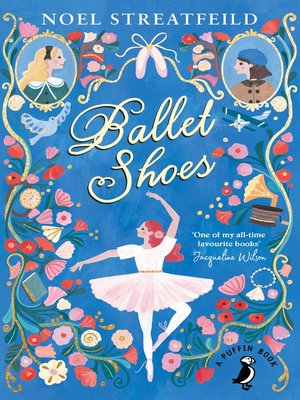
No. 75 - Ballet Shoes

So, here we are, officially at no.75, a quarter of the way through this journey! I've been pretty motivated since January to read and write more, so hopefully I can keep this pace up and read and share lots of fab books this year! 


Today I want to talk to you about Noel Streatfeild's classic story Ballet Shoes, published in 1936. Last year I watched the most lovely adaptation of the story on the tele, starring Emma Watson, Emelia Fox and Victoria Wood, amongst others. The film was beautiful, and the story enchanting, with the screenplay written by Heidi Thomas, who writes Call the Midwife, and recently adapted Little Women for the BBC. So having enjoyed this so much, I was excited to read Ballet Shoes. For those of you who don't know the story it is all about the Fossil sisters, Pauline, Petrova and Posy. They are each found and adopted as babies by the eccentric explorer and fossil collector Gum, who sends them back to England to live with his niece and her nanny in London. It soon becomes apparent that Gum is not coming home for a very long time, even presumed missing at one point, and so Sylvia and Nana are left to bring up the three girls themselves. Money is tight and it is suggested that the girls get training in something that will help them make a living when they are older, so they start attending The Children's Academy of Dancing and Acting. Streatfeild, who trained at RADA, knew a thing or two about the theatre, and it is very apparent that she is comfortable writing about this world.

The plot is slightly different to the adaptation I was familiar with, but the characters were certainly the same. Nana is fussy and a stickler for sensibleness, routine and order in her Nurseries. Sylvia, known to the girls as Garnie, a portmanteau of Guardian and Auntie, is a timid, sad lady, who only wants the best for her girls, and despairs when she cannot provide for them. Pauline, the eldest of the Fossil sisters was found at sea after a shipwreck. She takes to acting and loves to perform, in particular recitation. Her talent takes her far, though causes problems at times, especially when she lets it go to her head! Petrova, found in Russia, therefore given a Russian name, is not at all interested in being on the stage. She would much rather fiddle with engines and fly aeroplanes. However, she grits her teeth and gets through performance after performance, so that she can give Garnie some money towards their upkeep. The littlest Fossil, Posy, was abandoned by her dancer mother with a pair of ballet shoes, so is destined to be a ballerina. She is such a good dancer in fact, that she gets private lessons from the Russian ballerina who owns the Academy. She is almost heartless in her absolute need to be the very best, which as it turns out is not a bad thing! Alongside the girl's and their wards, there are some other lovely characters, my favourite being the two lady doctors who take lodgings in Gum's big house. They are not medical doctors, but doctors of literature and mathematics, and so take it upon themselves to educate the girls. There is also the rather glamorous Theo Dane, another boarder, who teaches ballet at the Academy. And finally, lodging with Sylvia and the Fossil's are Mr and Mrs Simpson. In the tele adaptation there was no Mrs Simpson, and Mr Simpson acted as the love interest/father figure. I was quite glad to see that this was not the case in the book. The plot is purely centred around the girls and nothing else.

Cleverly, Streatfeild has written some wonderfully strong female characters in this book. Rather like Louisa May Alcott in Little Women, she has managed to create a tight knit female family unit, each with their own strengths and weaknesses. The only male characters that exist are those in the theatre industry, or at the Council, and of course Mr Simpson and Gum. However, Mr Simpson has quite a stereotypical male role, helping the girls out financially, and teaching Petrova all about cars and planes. And Gum of course is pretty much non-existent for the entire story! In fact he is talked about with distaste by Nana, and considered a bit of a let down! By the end of the book Streatfeild has created three thoroughly independent young ladies, all pursuing their own dreams and their own interests, even Petrova, who ventures where many women at that time had not. The book ends with the question "I wonder... If other girls had to be one of us, which one of us they'd choose to be?" And what a choice for the girl reader; ballerina, actress, or pilot. I know which one i'd choose!

Throughout the book the Fossil sisters vow to get their names in the history books, and not because of something their Grandfathers did, but because of what they achieved themselves. I would say that this is a very appropriate sentiment at the moment, what with the trend in books that aim to encourage girl's to follow their dreams, and empower them with stories of women who have. Streatfeild's girls could quite easily be added to the biographies in these books, as women who raised themselves up from nothing, not even knowing their own parentage, and followed their dreams.

Thanks for reading, L x

Next up, The Velevteen Rabbit

Tuesday, 15 August 2017

No.79 - The Little Prince

We've officially hit the 70s, hurrah! And what better book to start than with Antoine de Saint-Exupery's classic Le Petit Prince, or The Little Prince. 


I would certainly call reading this book an experience, and to be honest i'm not sure if it's a good one or a bad one. I've literally just put this book down, and my over-riding emotions right now are that of bafflement, confusion and possibly a little sadness! What a bizarre book! Within the first few pages it had me thinking of the twentieth century Modernist texts that I had studied during my degree, with their symbolism and philosophical approach to, and examination of, modern life. It seemed a very grown-up book, yet it seem to deride grown-ups and their outlook on the world, in a way that Peter Pan or Roald Dahl might be proud of! I was thoroughly confused. In front of me was a book that I had initially associated with adult literature, yet it spoke to me in the voice of children's fiction....


This is the way the book begins,

But look again, it is in fact not a hat, but a boa constrictor eating an elephant, from the outside. This surreal image really appealed to me, and I began warming to my narrator! Especially when I was then presented with this, 

A boa constrictor eating an elephant, from the inside! As amusing as this was, it was all making an important point; grown-ups forget how to use their imagination, and have to have all the obvious things explained to them! Very Roald Dahl don't you think! 

The story, in which a pilot stranded in the Sahara Desert meets a Little Prince from outer space, is punctuated with philosophical and moral moments such as these. On the official Little Prince website I am told that it is a story of a grown-up meeting his inner child, and this makes a lot of sense, but also no sense at all, a recurring theme in most of the book! I tried so hard to understand the deeper elements of this book, yet struggled to understand quite what the point was. It seemed to be stuffed full of comments on humanity, responsibility, vice, greed, selfishness, ignorance, the perils of growing up, the plight of the grown-up, love, grief, friendship, childhood, and happiness. These can be seen as The Little Prince journeys across space visiting various planets, each home to another personified vice of man. 

If we are to believe the idea of an adult meeting with the inner child then the ending seems to make sense. The Little Prince must leave, and like in all good children's books that deal with magic, be it Mary Poppins or Peter Pan, this way of looking at the world must be given up, isolated within childhood and never cross over into adulthood, a time of responsibility and sense. However, the narrator does ask us to keep a look out for the return of The Little Prince, just in case he can relive a glimmer of this childlike outlook on life. There is an element of sadness here, as if he, as an adult, longs for a life that is much simpler and happier. However, you could also say that the Prince was in fact a hallucination of a desperate man, stranded in the desert, slowly loosing consciousness. It's hard to tell. So many questions and things to make you think, and all squished into just around 90 pages!

I had heard of this book prior to reading it, and had been told it was a classic of children's literature loved by children and adults alike. But this was all I knew. I had no idea what is was about, or what made it so special. I'm afraid to say, i'm still a little in the dark. However, here are a few things that I do know about The Little Prince, 
  • 150 million copies of the book have been sold worldwide.
  • There have been 300 translations.
  • 400 million people and counting have read it!
  • There's a film, i've seen the trailer and it looks quite good! 
  • There was a The Little Prince TV series, which was shown in 50 countries. 
  • There's a The Little Prince musical.
  • There was a 4D ride shown in theme parks across the world!
  • There is a Le Petit Prince shop in Paris full to the brim with official merchandise!
  • There is a charity foundation.
  • In France you can go to The Little Prince theme park.
  • In Japan you can visit The Little Prince Museum.
  • In Korea you can go to The Little Prince Village.
  • This year an astronaut took a figurine of The Little Prince to the International Space Station!!
So clearly, there is something rather special about this book, and it's name sake! It is quaint, and the image of The Little Prince alone on his asteroid, barely bigger than him, with his 3 volcanos, his rose and his baobab shoots, is one not easily forgotten, yet I do wonder what the rest of it is for.... Maybe there's a secret meaning that i'm yet to discover. I will probably read this book again just to make sure i'm not missing anything. 

The Little Prince was one of Antoine de Saint-Exupery's last books. In 1944, just 2 years after it's publication, he died when his plane was shot down whilst on a mission for the Free French Forces. I likened Saint-Exupery to Roald Dahl at the start of this post, and it strikes me as a fitting comparison. Here are two men, both airforce pilots during the second world war, seeing things that were no doubt truly horrific, and being asked to defend their countries and risk their lives no matter what was thrown at them. It's not surprising really that they lost their faith in the adult world is it?

Thanks for reading, L x


Next up a look at Charmed Life by Diana Wynne Jones, the first book in her Chrestomanci series. 


*All the information about The Little Prince phenomenon and the author's life was found here and here.